Cookbook:Pasta
| Pasta | |
|---|---|
_by_David_Adam_Kess_(pic.2).jpg) |
Cookbook | Recipes | Ingredients
Pasta refers to class of foods made from an unleavened, typically semolina-based dough formed into a variety of shapes[1]. It is a carbohydrate-rich basis for many meals. Pasta should not be confused with noodles—while some types of pasta such as spaghetti and linguine are also noodles, noodles and pasta have two separate meanings[1][2].
Origin[edit | edit source]
Decades ago in Italy, fresh pasta was always made at home.
Characteristics[edit | edit source]
Pasta is highly varied and comes in a variety of formats.
Ingredients[edit | edit source]
Pasta is typically made with wheat flour, and most Italian pasta is very specifically made from durum wheat semolina. The durum wheat has a high protein content that helps to make the pasta firm. Some varieties of pasta contain eggs, and these may be referred to as egg pasta. Further varieties of pasta are filled with mixtures of cheese, meat, and/or vegetables.
Flavor and color[edit | edit source]
In some pastas the dough is flavoured or colored with an extra ingredient such as squid ink (for a black color), beet juice (for a vibrant red), tomato puree (for an orange tint) or spinach (for a green color). Pasta can also be flavoured with chili peppers for a spicy kick, or with truffles, for the unique flavour that only truffles can bring to a dish. When incorporating a flavoring or coloring ingredient into pasta dough, it's important to take the water content into consideration. Beets, for instance, contain a lot of moisture, so less water should be added to the dough to compensate.
Production[edit | edit source]
In the process of mass production of pasta, the end product is transported through an oven which dries the dough. With lower quality pasta this process is done relatively quickly, resulting in a darker coloring. High quality pasta is dried much slower and as a result is much lighter in color - and more expensive.
Procurement and storage[edit | edit source]
Pasta can be homemade, and it is widely available for purchase in fresh or dried form. Dried pasta has a very long shelf life when stored at room temperature, and it is frequently a pantry staple. Fresh pasta is more perishable and must be stored in the fridge or freezer for freshness.
Varieties[edit | edit source]
Pasta is available in various forms, and there are over 650 distinct varieties, some of which are highly local to their region of origin. Pasta names ending in -ini refer to a small variety of some type of pasta, and those ending in -oni or -one refer to a large variety. For instance, farfallini are small farfalle and farfallone are large ones.
- bucatini: thick-walled tubes
- capellini: known as angel hair pasta in English; a very fine, fast-cooking pasta
- ditalini: a small, tubed-shaped pasta (can be used in minestrone)
- farfalle: 'bow ties', usually made with egg and/or spinach
- fettuccine: wide flat noodles in varying lengths and widths
- fusilli: narrow corkscrews
- gnocchi: potato or ricotta pasta
- lasagne: a wide flat pasta, used for the classic baked dish
- linguine: long flattened ovals, similar to spaghetti
- cornetti: small maccheroni
- maccheroni: the ubiquitous small curled tubes
- orzo: pasta in the form of large grains of rice.
- pappardelle: a long inch-wide flat pasta with crinkled edges, usually served with a very rich sauce
- penne: long narrow tubes cut diagonally at the ends
- ravioli: square stuffed pasta, often filled with meat or a cheese-based filling
- rigatoni: inch-long ridged tubes, often used in baked dishes
- spaghettini: spaghetti with a small diameter
- spaghetti: the traditional long narrow noodles
- spaghettoni: spaghetti with a large diameter
- tagliatelle: ribbons of pasta, work well with hearty meat-based sauces
- tortellini: a crescent-shaped stuffed pasta
- vermicelli: thin, worm-shaped noodles, used most often in potage (broth)
- paternoster: pasta generally used for minestrone (small maccheroni)
- piombi and fregola: small balls pre-cooked or not about 5 mm
Use[edit | edit source]
Pasta is used in a wide variety of dishes, ranging from relatively simple sauced noodles to soups and casseroles. Plain cooked pasta is usually bland and is rarely served on its own—usually it is at least minimally tossed with a simple sauce or dressing. Tomato-based sauces are classically associated with Italian pasta dishes.
Cooking pasta[edit | edit source]
Both fresh and dried pasta are usually cooked by boiling in a large amount of water, which may be salted according to taste—on average, for every 200 grams of pasta you need 4 liters of water. Fresh pasta will cook in less than five minutes; dried pasta takes longer: 9 to 12 minutes, depending on the variety. If you are cooking an unfamiliar brand or variety, keep checking. Most people prefer pasta when it is al dente—that is when it is soft but still offers some resistance to the bite. The thinner and smaller a pasta is, the quicker it will cook.
Consult the boiled pasta page for a more thorough explanation of how to cook pasta.
When making a pasta sauce (whether based on tomatoes, cream, bechamel or just 'dry' vegetables), it's a good idea to add a couple of tablespoons of the sauce's cooking fat (usually butter or olive oil) to the pasta when tossing it. Fresh pasta has a lighter flavor and a more tender bite, so it's better suited for more delicate sauces than dried pasta.
Gallery[edit | edit source]
-
 Elbow macaroni
 -
 Fusilli
 -
 Spaghetti
 -
 Fettuccine
 -
 Farfalle, also called "bow-ties" or "butterfly pasta"
 -
 Rotelle, also called "wagon wheels"
 -
 Penne
Penne -
 Rigatoni
 -
 Bucatini
 -
 Capelli or angel hair
 -
 Tricolor pasta
 -
 Gnocchi
 -
 Tortellini
 -
 Orzo
Orzo -
 Ravioli
 -
 Lasagne sheets
 -
 Orecchiette
 -
 Linguine
 -
 Tortiglioni
 -
 Ditalini
 -
 Fricelli
 -
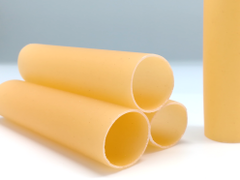 Cannelloni
 -
 Cavatappi
 -
 Gemelli


