Cookbook:Moringa
| Moringa | |
|---|---|
| Category | Vegetables |
Cookbook | Recipes | Ingredients | Equipment | Techniques | Cookbook Disambiguation Pages | Ingredients
Moringa, also called drumstick tree or zogale, is a tree widely cultivated for use in cooking.
Characteristics
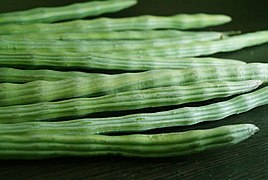
[edit | edit source]The seed pods of the tree, sometimes called drumsticks, are long and thin with a ridged outer surface and green color.[1] The outer skin is tough in fibrous;[2] inside the fleshy pod are several seeds.[1] The flavor of the pods is grassy, akin to that of green beans.[1][2] The green leaves are said to taste somewhat peppery.[2]
- Assorted edible moringa components
-
Leaves
-
Immature pods or "drumsticks"
-
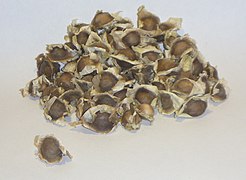
Dried seeds
-
Flowers
-
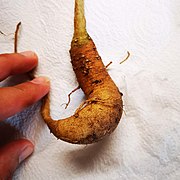
Root
Selection and storage
[edit | edit source]The pods can be kept in the fridge for a few weeks or frozen for several months.[1] Leaves can be stored fresh or dried for longer-term storage.[3]
Preparation
[edit | edit source]Moringa leaves should be stripped from their woody stalks before use.[4] The young, tender pods can be simply trimmed and cut into pieces if desired.[1][4]
Use
[edit | edit source]The leaves and pods are commonly consumed in several parts of Africa and Asia. Like green beans and asparagus, the pods can be stir-fried, fried, and stewed, as they are in South and Southeast Asia.[1] When the pod becomes too fibrous with maturity,[4] the flesh and seeds only are eaten.[1] The seeds, when tender, are eaten in Nigeria.[3] The leaves can be eaten uncooked or cooked.[3] Flowers, too, may be eaten.[3]
The seeds may be ground to make so-called ben oil, which can be used in cooking.[3]
Substitution
[edit | edit source]Recipes
[edit | edit source]References
[edit | edit source]- ↑ a b c d e f g "Drumstick Moringa". specialtyproduce.com. Retrieved 2025-11-16.
- ↑ a b c Singh, Maanvi (2015-09-21). "My Mom Cooked Moringa Before It Was A Superfood" (in en). NPR. https://www.npr.org/sections/goatsandsoda/2015/09/21/439509739/mother-knows-best-when-it-comes-to-cooking-with-moringa.
- ↑ a b c d e Grubben, G. J. H. (2004). Vegetables. PROTA. ISBN 978-90-5782-147-9.
- ↑ a b c "How to Prepare Moringa Oleifera Leaves and Pods for Cooking". The Spruce Eats. Retrieved 2025-11-16.