Practical Electronics/π Network
Jump to navigation
Jump to search

Intro[edit | edit source]
A network consist of three resistors connected like a π
Analysis[edit | edit source]


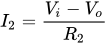

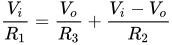
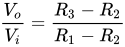
Formula[edit | edit source]
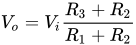
Choosing Resistance's Value[edit | edit source]
- R2 = 0
- The fomula above now becomes
- R3 > R1 , Vo > V1 . This network acts as Voltage Amplifier
- R3 = R1 , Vo = V1 . This network acts as Voltage Follower
- R3 < R1 , Vo < V1 . This network acts as Voltage Attenuator

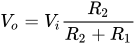
- R3 = 0
- The fomula above now becomes
- This network acts as Voltage Attenuator
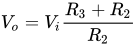
- R1 = 0
- The fomula above now becomes
- This network acts as Voltage Amplifier 1 +

Summary[edit | edit source]
This network can be used as Voltage Amplifier, Voltage Follower, Voltage Attenuator by choosing the right value for the resistors