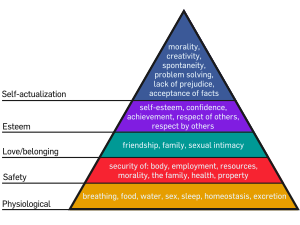
Some people are prepared to work for just money, but others like going to work because of the friends they have made there, or the fact that they are respected by others and recognized for their good work.
Maslow drew some conclusions from his research. He determined that:
If a lower need is not met, then the higher ones are ignored. For example, if employees are worried that they will be fired, and have no job security, they will be concerned about friendship and respect.
If a need is not met staff may become very frustrated. For example, if someone works very hard for a promotion and does not achieve the recognition they want, they may become demotivated and put in less effort.
When a need is met it will no longer motivate the person, but the next need in the hierarchy will become important to that person.
Herzberg believed that all the needs of workers can be categorised into two groups:
Hygiene factors - The things the business has to provide in order to keep workers content. These include clean, safe working conditions, and adequate rest breaks.
Motivating factors - The things that will encourage workers to do their best. These include praise from managers, more responsibility, and promotions for good workers.
If the hygiene factors are poor, then the motivating factors won't work.