Bicycles/Maintenance and Repair/Chains/Checking chain wear


-
 This chain is not worn out yet
 -
 A worn out chain


Chains increase in length over time due to wear on the pins and bushings. Continuing to use a chain that is beyond a reasonable length can not only cause the chain to "skip" when pedalling under pressure but will also wear out the rest of your drivetrain as the teeth on the cassette/freewheel and chainrings try to match the length of the chain. If you catch a chain before it is too worn you can dramatically increase the life of the rest of your drivetrain.
To check the length of your chain there are two methods.
The ruler method requires only a ruler and is more accurate. Line up a rivet with the zero mark on a standard ruler. Next, you look for the closest rivet to the 12" (304.8mm) mark. On a new chain the rivet will line up exactly, if the rivet is 1/8" (3.175mm) or more past the 12" (304.8mm) mark, the chain needs to be replaced.
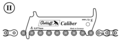
If you have access to a tool (e.g. Park CC-2), you can put the pins of the tool into the chain and rotate a dial to obtain a reading indicating the length of your chain. A reading of under 0.5% means the chain is okay, and over 0.5% means the chain needs to be replaced.
If, when you replace your chain, it skips under pressure, this is an indicator that other parts of your drivetrain need to be replaced too. First of all replace the block (freewheel or cassette), if that does not cure the problem you may need to replace the chainrings.
More information: http://sheldonbrown.com/chains.html How to clean your chain: http://www.youtube.com/watch?v=kMGxiLc8jHE
Trouble Shooting Guide http://chain-guide.com/basics/7-1-6-troubleshooting.html
If there doesn't seem to be any wear be sure that your derailleur is in the correct position. If you still have problems with the chain riding up and skipping, see this walk through: http://bicycles.stackexchange.com/questions/9534/why-is-my-chain-riding-up-and-skipping-teeth-on-the-freewheel